About camel milk
Camel milk is the tastiest alternative to cow’s milk!
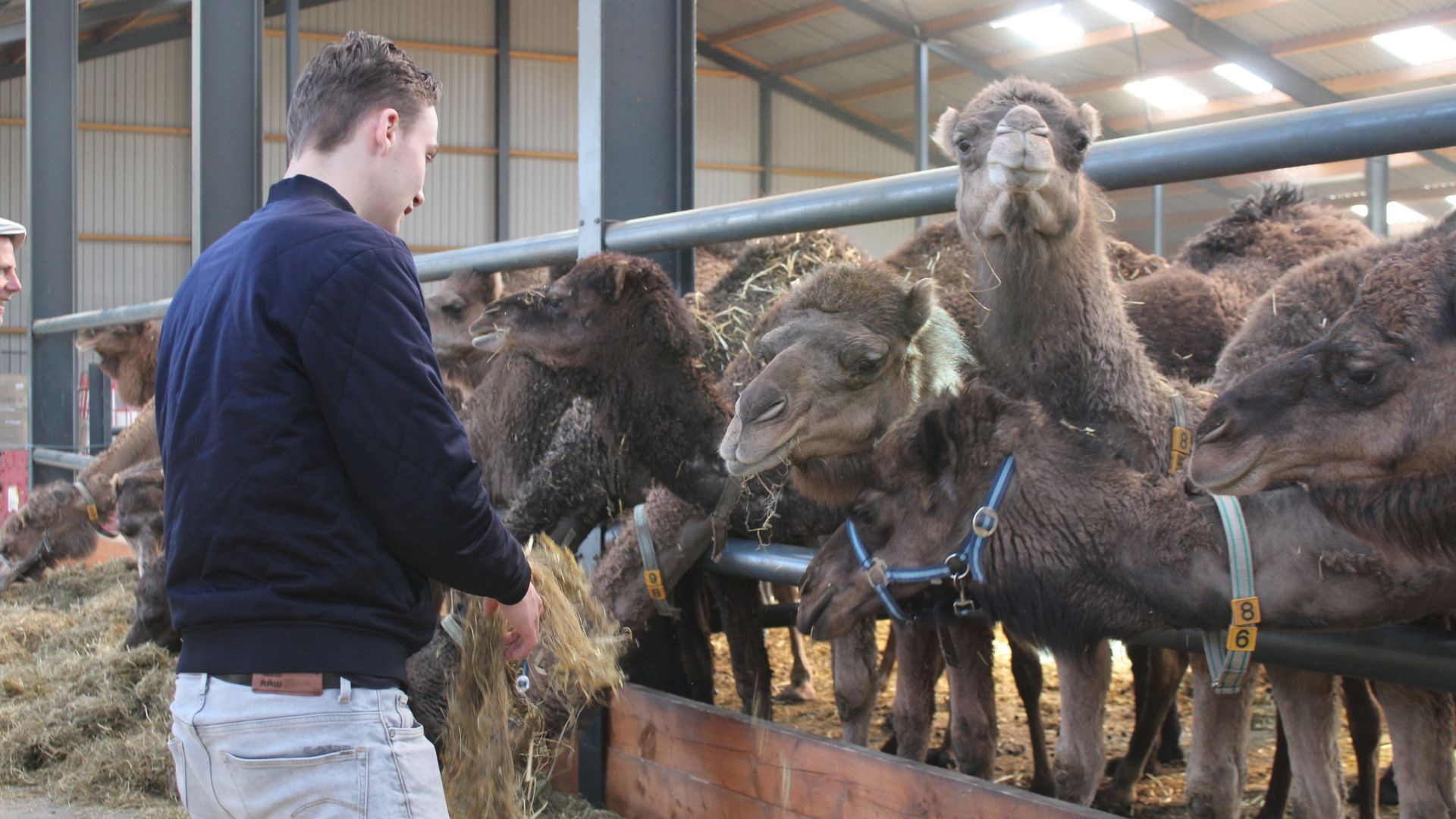
Camel milk is unprocessed, pure and natural, and unpasteurized. Camel milk has been new to the Netherlands since 2006. Camel Dairy Smits is the first and, for the time being, the only camel dairy in Europe . Dutch camel milk tastes approximately the same as cow’s milk. Some people find that camel milk tastes somewhat saltier and spicier than cow’s milk. Cows and camels eat mostly grass. This grass largely determines the taste of the milk.
According to the FAO (the World Food Organization), camel milk is one of the healthiest types of animal milk. Camel milk contains no beta-lactoglobulin, the protein that plays a major role in the development of cow’s milk allergy.

Pick up camel milk at our farm
Would you like to pick up camel milk at the farm? That is certainly possible, but always check our opening hours before you come.
The prices of fresh camel milk:
- 0.5 liter (bottle) €6.50 (only on Monday and Wednesday until 11:00)
- minimum order 5 liters
- 5 liters €65 (including bucket at €2.50)
- 10 liters €130.00 (including bucket at €2.50)
Frozen camel milk:
- 0.5 liter (bottle) €6.50
Positive effects
Some people choose not to drink cow’s milk. Camel milk offers an excellent alternative for this group. The taste of camel milk is similar to that of cow’s milk, but camel milk is 100% free of cow’s milk protein. It contains exclusively camel milk proteins, which contribute to muscle growth and the maintenance of muscle mass and bone health.
Moreover, camel milk is a natural source of calcium, which brings with it several important benefits. In short, camel milk is not only a tasty alternative to cow’s milk, but it also offers a valuable source of calcium for various aspects of a healthy lifestyle.
- It supports normal energy metabolism.
- It promotes the normal functioning of muscles.
- It contributes to healthy neurotransmission.
- It stimulates the action of digestive enzymes.
- It plays a crucial role in cell regeneration and specialization.
- It is essential for maintaining strong bones and teeth.
Nutritional value (per 100 ml)
- Protein: 3.4%
- Fat: 4.2% (of which 1.8% unsaturated fatty acids)
- Lactose: 4.3%
- Minerals: 0.9%
- Energy: 53 kcal (222 kJ)
Minerals and vitamins in camel milk
Minerals
Na (mg%) 36
Ca (mg%) 97
Zn (mg%) 3.4
Mg (mg%) 16
Vitamins
Vitamin C 3.6
Vitamin A (IU) 129.1
Vitamin D (IU) 0.8
Vitamin E 0.027
Save advice
The bottles of fresh milk you can buy contain unprocessed camel milk! That is why the fresh milk keeps for 3 to 4 days in the refrigerator. Immediately after the camels are milked, the milk is cooled to 4°C. A portion of the fresh milk is frozen in 0.5-liter bottles, as the milk has a shelf life of 1 year when frozen. If you want to drink the frozen camel milk, you must let the bottles thaw in the refrigerator. After that, the milk keeps for another 3 days, provided it is kept refrigerated. Milk that has been thawed cannot be refrigerated. A portion of the fresh milk is frozen in 0.5-liter bottles, as the milk has a shelf life of 1 year when frozen.
If you want to drink the frozen camel milk, you must let the bottles thaw in the refrigerator. After thawing, the milk will keep for another 3 days, provided it is stored chilled. Milk that has been thawed cannot be refrigerated. Shake before use! Because the camel milk is unprocessed, the fat it contains may float on top. This does not affect the taste; the only thing you need to do is shake well before use! The quality of the camel milk is closely monitored in accordance with the hygiene package for farm dairy production.